
Choosing the right staffing agency is an important decision for any business. Whether you need temporary workers, seasonal employees, or additional support during busy periods, working with a reliable staffing partner can help you manage your workforce more effectively.
If your business is looking for a staffing agency in Ontario, it is important to understand the agency’s services, recruitment process, communication practices, and responsibilities before entering into an agreement.
In this guide, we explain what Ontario employers should consider when choosing a staffing agency and the questions to ask before getting started.
Why Choosing the Right Staffing Agency Matters
A staffing agency can help businesses find suitable workers, respond to changing workforce demands, and reduce the time spent on recruitment.
However, not every agency offers the same level of service. Before choosing a staffing partner, consider the following factors:
-
Recruitment experience: Look for an agency familiar with your industry and the types of roles you need to fill.
-
Candidate screening: Ask how candidates are assessed for relevant skills, experience, and suitability.
-
Workforce flexibility: Choose a provider that can respond to changing staffing requirements.
-
Communication: Make sure the agency provides timely updates and clear points of contact.
-
Transparent terms: Review service agreements, fees, replacement policies, and other relevant conditions before signing.
Taking the time to evaluate these factors can help you establish a productive working relationship.
How to Evaluate a Staffing Agency in Ontario
1. Understand the Agency’s Services
Start by identifying your workforce requirements. Do you need temporary workers for a short-term project, seasonal staff during peak demand, or ongoing recruitment support?
Choose an agency that offers services suited to your business needs.
For example, businesses experiencing fluctuations in demand may benefit from temporary staffing services, which can help them respond to short-term workforce requirements.
2. Review Recruitment and Screening Processes
Ask how the agency sources, interviews, and evaluates candidates.
Depending on the position, the process may include reviewing work experience, assessing job-related skills, checking references, and verifying relevant qualifications.
You should also clarify how the agency ensures candidates understand the role, workplace expectations, and required experience.
3. Understand Employment and Payroll Responsibilities
Before engaging a staffing agency, clarify who employs the workers, who manages payroll, and how employment-related responsibilities are handled.
Review the service agreement carefully and ask about applicable employment standards, workplace insurance, and health and safety responsibilities.
Ontario’s employment standards requirements may apply to both temporary help agencies and the businesses using their services. You can consult the Government of Ontario’s guide to temporary help agencies for more information.
4. Check References and Reputation
Look for evidence of consistent service and professional communication.
Where possible, ask for client references or examples of previous staffing assignments similar to yours. You can also review publicly available customer feedback and assess whether the agency has experience serving businesses with comparable workforce needs.
A strong reputation can be helpful, but it should be considered alongside the agency’s recruitment practices, service terms, and ability to meet your requirements.
5. Clarify Pricing and Service Terms
Before signing an agreement, make sure you understand how the agency charges for its services.
Ask about hourly bill rates, additional fees, minimum booking periods, cancellation policies, overtime arrangements, and any terms that apply when hiring an assigned worker directly.
Request a written explanation of the costs and conditions so that your business can plan its staffing budget accurately.
6. Understand Applicable Ontario Requirements
Businesses working with staffing agencies should understand the employment laws and obligations that may apply to their arrangement.
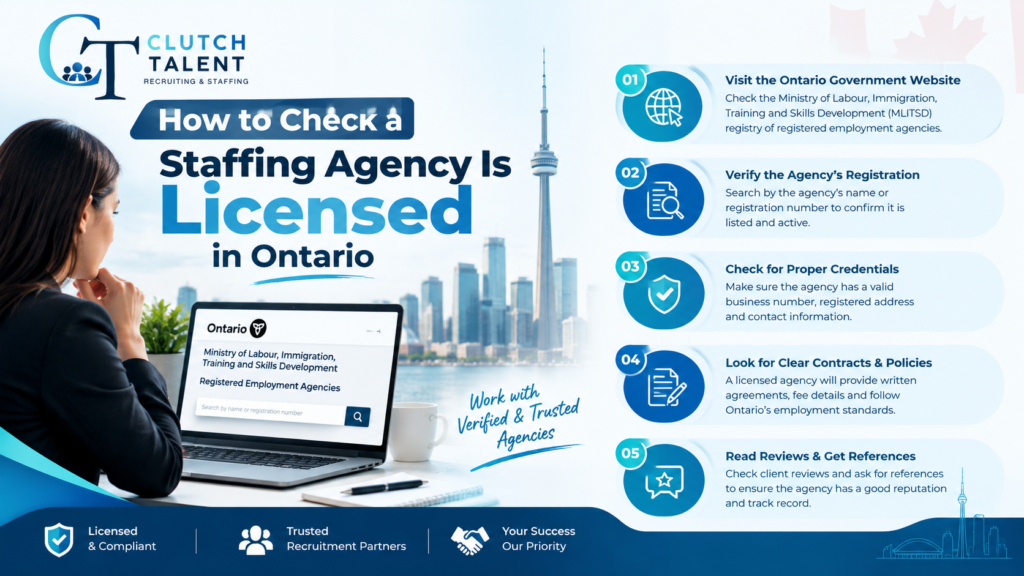
Ontario has specific rules concerning temporary help agencies and recruiters, including licensing requirements and restrictions on knowingly using an unlicensed provider where the law applies.
If your business is considering a temporary help agency, consult the Government of Ontario’s official information on licensing for temporary help agencies and recruiters.
You can also review the Ministry of Labour’s public status page for information about agency and recruiter licensing status.
The applicable requirements depend on the nature of the services and any relevant exemptions. Businesses should verify the requirements for their particular arrangement before engaging a provider.
Questions to Ask Before Choosing a Staffing Agency
Before entering into a staffing agreement, consider asking the following questions:
| Question | Why It Matters |
|---|---|
| What types of roles and industries do you support? | Helps determine whether the agency suits your requirements. |
| How do you recruit and screen candidates? | Provides insight into candidate suitability and quality. |
| How quickly can you respond to staffing requests? | Helps you plan for urgent or changing workforce needs. |
| Who manages payroll and employment-related responsibilities? | Clarifies the parties’ respective responsibilities. |
| How is workplace insurance handled? | Helps clarify applicable coverage arrangements. |
| What health and safety training is provided? | Supports appropriate workplace preparation. |
| What are your pricing and cancellation terms? | Helps prevent unexpected costs. |
| What happens if a worker is not suitable for the role? | Clarifies replacement procedures and service expectations. |
| What terms apply if we hire an assigned worker directly? | Helps avoid misunderstandings about direct hiring. |
| How do you protect workers’ personal information? | Helps you understand the agency’s privacy practices. |
Request written answers where appropriate and review the service agreement before proceeding.
Benefits of Working with a Suitable Staffing Partner
A well-matched staffing partner can help businesses manage recruitment demands and adapt to changing operational requirements.
Potential benefits include:
-
Time savings: Reduce the time your team spends sourcing and screening candidates.
-
Workforce flexibility: Adjust staffing levels to accommodate changing workloads.
-
Recruitment support: Access assistance finding candidates for specific roles.
-
Operational continuity: Address staffing gaps that could otherwise affect daily operations.
-
Administrative support: Coordinate recruitment-related processes according to the agreed service arrangement.
The results depend on your business requirements, the roles being filled, and the quality of the staffing partnership.
Why Consider Clutch Talent?
Clutch Talent helps businesses explore staffing solutions suited to their workforce requirements. Whether you need additional support for temporary assignments or help managing changing staffing demands, choosing the right approach starts with understanding your business needs.
We encourage employers to discuss their requirements, timelines, and role expectations so that the appropriate staffing solution can be considered.
If your business needs workforce support in Brampton, Mississauga, or the Greater Toronto Area, you can contact Clutch Talent to discuss your staffing requirements.
You can also explore our temporary staffing services to learn more about the available options.
Frequently Asked Questions
How do I choose a staffing agency in Ontario?
Consider the agency’s recruitment experience, candidate screening process, communication, pricing, service terms, and understanding of applicable employment requirements. Choose a provider that can meet your specific workforce needs.
What should I ask a staffing agency before signing a contract?
Ask about recruitment methods, candidate qualifications, pricing, payroll responsibilities, workplace insurance, health and safety arrangements, replacement policies, and direct-hire terms. Review the written agreement carefully before signing.
Are there licensing requirements for staffing agencies in Ontario?
Ontario has licensing requirements for temporary help agencies and recruiters, subject to applicable definitions and exemptions. Businesses should consult the Government of Ontario’s licensing guidance to understand the rules that apply to their arrangement.
What responsibilities do businesses have when using temporary help agencies?
Depending on the arrangement, businesses may have responsibilities under Ontario employment standards legislation, including requirements concerning records, certain unpaid wages, and protections for workers exercising their rights. Consult the Ontario guide to temporary help agencies for details.
Can a business hire a temporary worker directly?
Ontario’s employment standards rules restrict certain provisions that prevent clients from hiring assignment employees directly. Rules concerning fees and timing may apply. Review the current government guidance and your agreement to understand the requirements relevant to your situation.
Final Thoughts
Choosing a staffing agency involves more than finding workers quickly. It requires evaluating recruitment quality, communication, service terms, employment responsibilities, and the agency’s ability to support your business.
By asking the right questions and reviewing the relevant Ontario requirements, you can make a more informed decision and establish a staffing arrangement that supports your operational goals.
If you are looking for staffing support in Brampton, Mississauga, or the Greater Toronto Area, contact Clutch Talent to discuss your requirements.
Disclaimer: This article provides general information for educational purposes and is not legal advice. Consult official Ontario government resources or a qualified employment lawyer for guidance on your specific circumstances.